Here is the fun little founder trap no one warns you about:
You say you want a team.
You say you want support.
You say you want people to take ownership.
Then someone smart, talented, thoughtful, and very capable shows up… and suddenly your nervous system starts acting like you invited a raccoon into the office.
Because hiring people better than you sounds lovely in theory.
In real life, it pokes every tender founder fear.
What if they know more than I do?
What if clients like them more?
What if I am no longer the go-to person?
What if I lose control?
What if I am not as necessary as I thought?
That last one is the spicy little onion at the center.
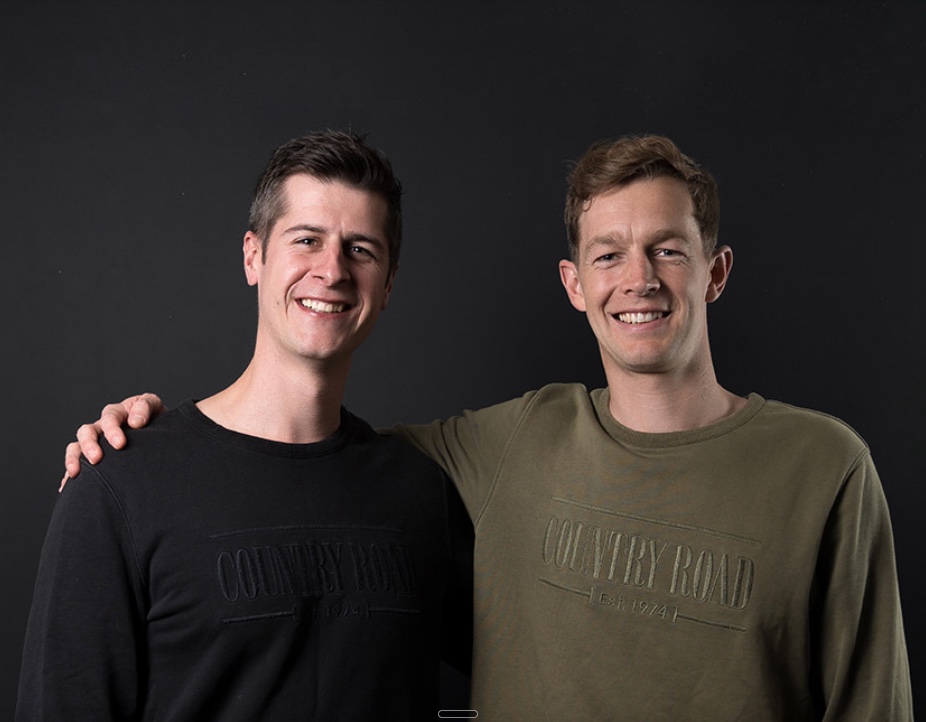
In this episode of The Accidental CEO Podcast, I sat down with Matt Budden and Matt Smith, co-founders of WORTTTH, to talk about hiring, culture, partnership, and what it really means to build a team that can grow beyond you.
Not a team that waits for you to approve every comma.
Not a team that needs you to rescue every situation.
Not a team that technically exists but somehow still leaves you carrying the whole business in your brain like an overloaded browser with 47 tabs open.
A real team.
The kind that brings ideas, takes ownership, protects the standard, and moves the business forward in ways you could not have done alone.
That is the dream.
And also, for a lot of founders, that is the threat.
Let’s talk about it.
Hiring Help Is Not the Same as Building a Team
Most founders start hiring from a place of exhaustion.
They are buried in emails, edits, client work, admin, operations, invoices, follow-ups, content, decisions, and approximately 900 tiny tasks that somehow all feel urgent.
So they hire “help.”
And help is good. Help matters. Help can be the first real breath inside a business that has been running on founder fumes.
But hiring help is not the same as building a team.
Hiring help says, “Please take these tasks off my plate.”
Building a team says, “Here is where we are going. Here is what matters. Here is what good looks like. Here is the outcome I need you to own.”
Those are wildly different invitations.
One creates dependency.
The other creates capacity.
Matt Budden said something in the conversation that stopped me in my tracks: you cannot motivate people. You can only create an environment where people can motivate themselves.
That is such a CEO-level reframe.
Because many founders hire someone and then try to manually inject care, urgency, pride, ownership, and initiative into them. Like, “Here is the task. Also, please magically care about this business as much as I do.”
But people do not become invested just because they were assigned a checklist.
They become invested when they understand the bigger vision, when the culture is clear, when values are more than a Canva page, and when their role connects to something meaningful.
For the Matts, WORTTTH is not just bookkeeping, accounting, financial strategy, reporting, or analysis. Those are the services. The bigger mission is helping founders flourish.
That distinction matters.
Because most people do not wake up thrilled to complete another spreadsheet. But they can wake up connected to the idea that better financial decisions help business owners support their teams, families, communities, and futures.
That is how work becomes more than work.
That is how a team becomes more than task completion.
Your Values Need to Show Up Before the Hire
Here is where a lot of hiring goes sideways:
The founder does not actually know what they are hiring into.
They know the role title.
They know the tasks.
They know they are drowning.
They know they need someone “detail-oriented,” which is somehow in every job description ever written.
But they have not clearly defined the culture, the standards, the values, the decision-making norms, or what kind of person will actually thrive in the business.
So they hire based on vibes and hope.
Hope is adorable. It is not a hiring strategy.
Matt Smith shared that early in building WORTTTH, he and Matt Budden sat down and asked bigger questions:
What does life look like for each of us?
Where do we want to go with this business?
What do we stand for?
What are we actually building here?
From that work, they created a culture document they continue to return to. They also share that document during the interview process so candidates can feel whether they are aligned before they are officially part of the team.
That is smart.
Because values should not be a surprise waiting inside onboarding.
If your business values excellence, ownership, care, creativity, communication, accountability, or a human pace, candidates should feel that from the beginning. They should know what kind of environment they are entering.
And you should know whether they light up around those values or just nod politely because they want the job.
The goal is not to hire people who are exactly like you.
Please do not build a team of mini-yous. One founder brain is enough chaos for the room.
The goal is to hire people who align with the values while bringing different strengths, perspectives, and skills.
That is where the business gets stronger.

Hire People Better Than You
A client once gave the Matts advice that became a core part of how they built their team:
Always hire people who are better than you.
Simple. Annoying. Correct.
This is the part where founders often smile, agree, and then immediately hire someone they can comfortably stay superior to.
Because hiring someone better than you requires an ego death. A tiny one, but still.
It asks you to stop confusing being the best at everything with being a good leader.
It asks you to let go of being the answer machine.
It asks you to stop measuring your worth by how needed you are.
And whew. That one gets personal.
For a lot of founders, being needed is the original business model. Clients needed you. The work needed you. The team needed you. The inbox needed you. The whole thing worked because you were willing to be everywhere.
But the same thing that built the business can become the thing that caps it.
At some point, your constant involvement stops being noble and starts being expensive.
Expensive for your time.
Expensive for your energy.
Expensive for your team’s growth.
Expensive for the business’s capacity.
Matt Smith shared that hiring strong people took WORTTTH in directions the founders could not have taken it alone. That is the point.
The right hires do not just reduce your workload.
They expand what is possible.
They bring thinking you do not have.
They notice gaps you missed.
They build systems you would have avoided.
They strengthen client experience.
They challenge assumptions.
They make the business less dependent on one person’s brain.
That is not a threat.
That is scale.
Delegation Requires an Identity Shift
Let’s say the quiet part louder:
Delegation is not just a tactical skill.
It is an identity shift.
You can have the project management tool. You can have the SOPs. You can have the job description. You can have the beautifully color-coded ClickUp board that makes you feel like a very responsible adult.
And still struggle to let go.
Because the real problem is not always that you do not know how to delegate.
Sometimes the problem is that part of you still believes your value comes from being the one who holds it all.
That is why delegation can feel so emotional.
It is not just, “Can this person do the task?”
It is:
Can I trust someone else with the client relationship?
Can I allow them to do it differently?
Can I let them build trust without me hovering?
Can I stop stepping in to prove I am still essential?
Can I lead without being the hero?
Matt Budden talked about how hard it was for him and Matt Smith to let go of certain client relationships because they are deeply relational people. Human connection is one of their core values. They care about the relationships they have built.
So letting the team step into those relationships was not just operational.
It was personal.
That is what so many founders miss.
You are not only delegating tasks. You are delegating pieces of identity.
The identity of being the trusted one.
The fixer.
The standard-holder.
The creative genius.
The person who knows the client best.
The one who makes sure nothing falls apart.
And listen, I get it.
But if the business is going to have a bigger impact, it cannot only work when you are in the middle of every room.
At some point, the founder has to shift from “I do the work” to “I build the conditions for great work to happen.”
That is leadership.
Less glamorous than being the hero. Much more sustainable.
Bring the Team Into the Hiring Process
One of my favorite practical takeaways from this episode was how the Matts bring their existing team into the hiring process.
Because here is the truth:
Founders have blind spots.
Shocking, I know. We are all very stable geniuses until someone checks our calendar, inbox, or hiring history.
But seriously, founders can get excited about a candidate and miss how that person may actually fit into the existing team dynamic.
Your team may catch things you do not.
They may notice communication style, chemistry, tone, humility, collaboration, or subtle misalignment that matters later.
Matt Budden shared that WORTTTH gives candidates access to the team and gives the team access to candidates. That way, they can see how the person may actually fit into the culture they are protecting.
This is such a useful move for founders who are hiring beyond the first few roles.
Because the business is no longer just yours in the same way.
Yes, you may own it.
Yes, you may carry the final responsibility.
Yes, the vision may have started with you.
But the culture belongs to everyone inside it.
When you invite the team into the hiring process, you communicate: this is not just about filling a seat. This is about protecting what we are building.
That creates buy-in.
It also helps prevent the very expensive founder habit of hiring quickly and cleaning up slowly.

Culture Is What You Model
Culture is not what you write in the team handbook.
Culture is what people experience.
It is what gets rewarded.
It is what gets tolerated.
It is what gets ignored.
It is what people see you do when you are stressed.
It is what happens after hours.
It is who gets praised.
It is who gets away with things.
It is whether “balance” is real or just a cute word in the values deck.
Matt Smith talked about the importance of not creating a culture they did not actually want. For example, even if the Matts told their team they did not need to be online after hours, sending messages after hours could still create pressure.
That is such an important point.
Your team does not only listen to your words.
They read your behavior.
If you say, “Take time off,” but you never do, they notice.
If you say, “No rush,” but every message feels urgent, they notice.
If you say, “We value family,” but praise people for being constantly available, they notice.
If you say, “I trust you,” but check every detail, they notice.
And they adapt.
Not always because you asked them to. Because humans are smart and they want to survive the culture they are in.
That means leaders have to be honest about the pressure their behavior creates.
Even unintentional pressure is still pressure.
This is especially true for founders who love their work. Many founders are workaholics with good branding. They are passionate, driven, creative, and deeply invested. They also sometimes forget that their team did not start the business and may not want to build their life around it.
Your pace can become the silent expectation.
That does not mean you have to pretend not to care.
It means you need to model the culture you actually want.
Schedule the message.
Clarify urgency.
Respect offline time.
Stop making everything a fire.
Define what actually needs immediate attention.
Give people room to have lives.
High standards do not require a panic rhythm.
Care and Accountability Have to Live Together
A team culture built only on care can become mushy.
A team culture built only on accountability can become cold.
The magic is in holding both.
Matt Budden named this beautifully: there is a care and accountability part of building teams.
Founders often overcorrect.
If they have been too intense, they become too soft.
If they have been too soft, they swing into hard-edged accountability.
If they are conflict-avoidant, they call it kindness.
If they are demanding, they call it excellence.
But real leadership is not hiding behind either one.
Care says: I see you as a human.
Accountability says: I trust you to own your role.
Care says: Your life matters.
Accountability says: The work matters too.
Care says: We can talk honestly.
Accountability says: We will not avoid the hard thing.
You need both.
Otherwise, care becomes enabling, and accountability becomes fear.
This is where “high standards, human pace” becomes more than a pretty phrase. It becomes a leadership practice.
It means we pursue excellence without burning everyone down to get there.
It means we can be kind and still clear.
It means we can say no when something is not aligned.
It means we can move slower than our ambition wants if that pace protects the quality of the work.
It means we stop pretending sustainable growth is built from constant urgency.
Do Not Go Wide If You Need to Go Deep
Another line I loved from Matt Budden was this:
They are not trying to go wide. They are trying to go deep.
That is a whole business strategy in one sentence.
In a world where everyone seems obsessed with scaling faster, launching more, growing bigger, and squeezing every drop of capacity from the team, depth is almost rebellious.
But depth is often what builds trust.
Depth creates better client experience.
Depth creates better systems.
Depth creates stronger relationships.
Depth creates a clearer culture.
Depth gives the team time to do excellent work.
For WORTTTH, that means being intentional about onboarding, being honest about fit, and not taking on every client just because they could.
That matters.
Because sometimes the most CEO-level decision is not “How do we grow faster?”
Sometimes it is:
What kind of growth can we actually hold well?
What pace protects the work?
Where are we saying yes because of opportunity, not alignment?
What would it look like to serve fewer people better?
What foundation needs strengthening before we add more weight?
Not every business needs to become a machine.
Some businesses are meant to be built like a home: strong foundation, thoughtful rooms, good light, space to breathe, and people who actually want to be there.
That kind of business may not grow at the most dramatic pace.
But it can grow with more integrity.
And that is worth paying attention to.
Partnership Needs Protection Too
This episode also touched on something founders do not always talk about enough: business partnerships.
Especially partnerships with friends.
The Matts were friends before they were co-founders, and their families are close. That kind of relationship can be a huge gift inside a business.
It can also get messy fast if nothing is defined.
Trust is not a replacement for structure.
In fact, structure can be one of the ways you protect trust.
Matt Smith talked about having a partnership agreement in place. Not because they are planning for things to go wrong, but because real life happens. Businesses change. People change. Families are impacted. Unplanned circumstances happen.
Documentation is not a lack of love.
It is stewardship.
It says: this relationship matters enough to protect it.
That applies beyond formal business partnerships too.
If you have a team, contractor relationships, collaborators, or key vendors, clarity protects the relationship.
Clear expectations protect the relationship.
Clear decision rights protect the relationship.
Clear communication norms protect the relationship.
Clear ownership protects the relationship.
Founders sometimes avoid documentation because they want to be “nice.”
But nice is not the same as kind.
Nice avoids discomfort.
Kind tells the truth with care.
That distinction will save you a lot of resentment.
The Real Goal: A Business That Can Hold More Than You Can
At the heart of this whole conversation is a bigger question:
Are you building a business that depends on your constant involvement, or are you building a business that can hold more than you personally can?
Because those are different businesses.
One keeps you central.
One keeps you powerful.
Those are not the same thing.
Being central means everything routes through you.
Being powerful means you have built the clarity, culture, standards, systems, and team that allow the business to move without you touching every piece.
That is the CEO shift.
It is not about disappearing from your business.
It is about no longer being trapped inside every function.
You can still care deeply.
You can still have relationships.
You can still protect the quality.
You can still be the visionary.
You can still be present.
But you do not have to be the bottleneck.
The truth about hiring people better than you is that it will challenge your ego, your habits, your identity, and your relationship with control.
Good.
That is where the next level of leadership begins.
Because the goal was never to prove you could do everything.
The goal is to build something strong enough, clear enough, and alive enough that other brilliant people can help carry it forward.
And if that makes you a little less needed in the day-to-day?
That might be the best news your business has heard in a while.
SUBSCRIBE ON YOUR FAVORITE PODCAST PLAYER
Leave a Reply
More episodes