

More Content Won’t Fix Your Trust Problem
You know that frustrating thing where someone gets on a call with you and immediately says, “Oh my gosh, I had no idea you did all of this”?
That is not always a compliment.
Sometimes it means your online presence has been leaving a whole lot of your brilliance on the cutting-room floor.
You might be incredible at your work. Your clients may love you. You might have the receipts, the experience, and enough testimonials to wallpaper your office.
But if a cold prospect lands on your website or social media profile and feels absolutely nothing, your expertise is not the issue.
The connection is.
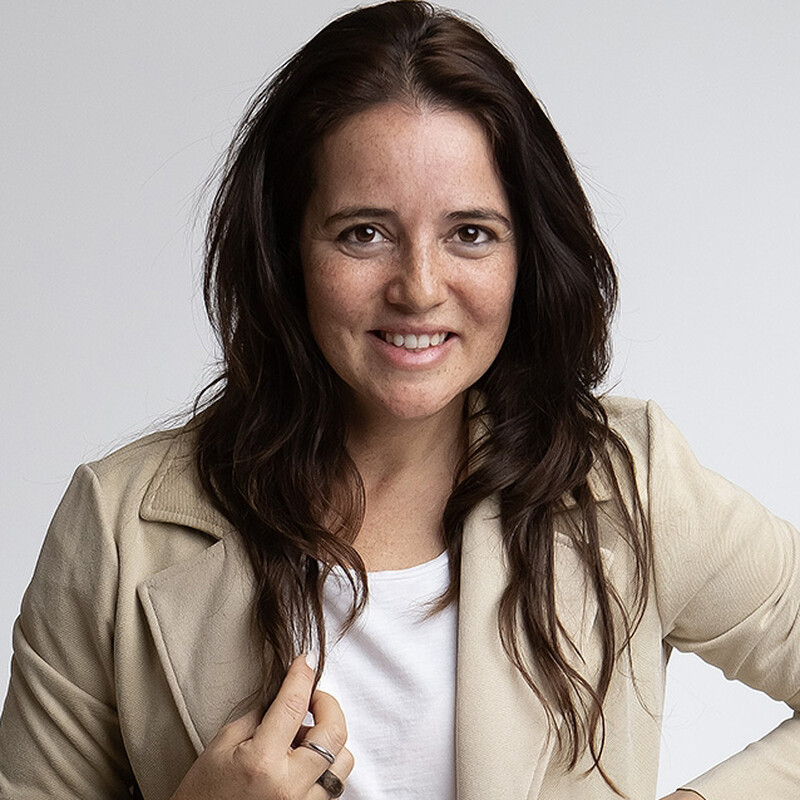
That was the heart of my conversation with Emmy-winning documentary filmmaker and Brand Magnetic founder Mariana Henninger.
Mariana spent 15 years creating documentaries and working with organizations including NBC, The New York Times, The Wall Street Journal, and Time Magazine. Her job required her to walk into unfamiliar environments, earn people’s trust quickly, and turn a complicated human story into something another person could understand and care about within minutes.
Not six months.
Not after a 48-email nurture sequence.
Minutes.
Now, she brings that skill into the online business world, helping founders use brand storytelling to create trust before the sales call ever happens.
And her message is one a lot of overextended business owners need to hear:
More content is not automatically better marketing.
You May Not Have a Content Problem
When content is not converting, the default advice is almost always the same.
Post more.
Be more consistent.
Make more Reels.
Try a different hook.
Start a newsletter.
Send more emails.
Get on another platform, because apparently what your already-full calendar needs is one more hungry little content machine demanding to be fed.
There is nothing wrong with consistency. Your audience does need opportunities to see your work.
But volume cannot repair a connection that was never properly built.
A lot of founders are following a marketing playbook designed for companies with large teams, paid media budgets, and people whose full-time job is to slice one podcast episode into 87 pieces of content.
Then they wonder why the same strategy feels slightly more exhausting when they are the CEO, creative director, sales department, client experience team, and person restarting the Wi-Fi.
Mariana describes much of online marketing as “microdosing” your brand.
Someone downloads your free resource. They receive your emails. They occasionally see your social posts. Over several months, they slowly gather tiny pieces of information about you.
Eventually, maybe, a complete picture begins to form.
Or they open your email and think, “Who is this person, and what did I download?”
I have absolutely been that person.
The problem is not that email marketing or social media content does not work. The problem is expecting disconnected pieces of content to do all the heavy lifting of trust.
Why Cold Audiences Cannot Feel Your Magic
Your existing clients have context.
They know how you think. They have seen you solve problems. They understand the level of care you bring into the room.
A cold prospect has none of that.
They may have found you through a comment, referral, podcast appearance, shared post, or random late-night Google search. Their first instinct is usually to investigate.
They check your Instagram.
They visit your website.
They open your About page.
They are trying to answer a quiet but important question:
What is this person’s deal?
Most businesses underestimate this moment.
We put enormous energy into getting discovered but very little into what happens immediately after discovery.
We polish the Instagram bio. We pin an introduction carousel. We list our credentials. We make sure there is a photo where we are laughing near a laptop.
But information alone does not create the kind of connection that makes someone remember you.
People need a reason to care.
Mariana’s documentary work taught her to look for the universal human thread inside a story. She could not include every detail of someone’s life in a three-minute film. She had to identify what would matter to the viewer and shape the story around that connection.
That is the same skill founders need when telling their personal brand story.
Your audience does not need your entire autobiography.
They need the part of your story that helps them understand themselves, their problem, or what might be possible for them.
What Is a Human Connection Video?
Mariana calls her signature format a human connection video.
It is typically a two-to-three-minute video that introduces your story, perspective, and values in a way that speaks directly to your ideal client.
It is not a dramatic montage of you walking through a field while a voice-over explains that you have always believed in dreams.
It is not a stack of client testimonials.
It is not a shortened sales webinar.
And it is not a pitch with a sentimental soundtrack underneath it.
A human connection video is designed to feel more like an intimate conversation over coffee.
There is no hard call to action at the end. Its main job is not to force the viewer into a funnel or convince them to buy before the final frame.
Its job is to create intentional human connection.
That does not mean there is no strategy involved. In fact, the strategy is what keeps the video from becoming a random origin story.
You select the parts of your experience that will matter to the person you want to reach. You use your story to help that person feel seen, safe, and confident that you understand the road ahead.
The right video does not shove someone toward the sale.
It gives them enough trust to move themselves.
The Best Clients Move Themselves
We have all experienced the difference between a client who arrives ready and a client who must be dragged through every step of the decision.
One asks thoughtful questions, trusts the process, does the work, and takes ownership of the result.
The other needs another call, another explanation, three more testimonials, a payment-plan variation, and perhaps a signed affidavit from your previous clients.
Mariana makes an important point: the people who move themselves toward a buying decision are often the strongest clients.
They are not there because they were cornered by a countdown timer.
They have paid attention, evaluated the fit, and decided that your offer is the right next step.
That matters even more when you sell a premium service, coaching program, consulting engagement, or creative experience.
Your client is not only buying the information or deliverable.
They are buying your judgment.
Your support.
Your process.
Your perspective.
They are deciding whether they trust you to guide an important part of their business or life.
A $27 template may not require a deep relationship. A multi-thousand-dollar engagement usually does.
The Four Trust Triggers
Mariana teaches four trust triggers that help create that relationship.
They are simple to understand, but most brands lean heavily on only one of them.
1. They Feel That You Understand Them
Your ideal client needs to feel that you understand more than the surface-level problem.
“Are you overwhelmed?” is not exactly groundbreaking market research.
What are they thinking but struggling to say?
What are they afraid will happen if they make the wrong decision?
What have they already tried?
What do they secretly want but feel slightly ridiculous admitting?
Strong brand storytelling gives language to the experience your client has not been able to clearly explain.
That is the moment they think, “Finally. Someone gets it.”
2. They Believe You Care About Their Result
People are increasingly cautious about online programs and services that overpromise before the purchase and disappear after the payment clears.
Your prospect does not want to feel like a lead in a spreadsheet or a screenshot for your next revenue post.
They want to know that the client experience will contain the same level of care as the marketing.
That trust is built through the way you speak about your clients, set expectations, answer questions, explain your standards, and demonstrate what support looks like.
Premium clients are not only asking, “Can this person get me a result?”
They are also asking, “Will I matter once I become a client?”
3. They Trust Your Expertise
This is where most established founders are already comfortable.
Credentials.
Years of experience.
Awards.
Case studies.
Testimonials.
Processes.
Results.
All of those things matter. Your prospect needs evidence that you know what you are doing.
But Mariana positions expertise as the third trust trigger, not the first.
A perfect résumé does not automatically make someone feel understood or cared for.
Your authority becomes more persuasive when it sits on top of a real human connection.
4. They Feel Aligned With Your Values
This is one of the biggest reasons a client chooses you over another qualified expert.
They like the way you think.
They appreciate your communication style.
They respect what you prioritize.
They can imagine enjoying the process of working with you.
In an era where information is widely available, people are not paying premium prices for information alone. They are paying for guidance, judgment, interpretation, and a relationship with a particular person.
Your values are not a decorative section on your website.
They are part of the buying decision.
Strategic Storytelling Is Not Random Vulnerability
One of my favorite parts of this conversation was our discussion about vulnerability.
Founders are constantly told to “share more of themselves.”
That advice is not necessarily wrong. It is simply incomplete.
Being personal does not automatically make content strategic.
You do not have to publicly process every hard experience, share details you would rather keep private, or turn your Instagram account into a digital diary.
Your story needs a purpose.
Mariana draws a useful distinction between demonstrating aligned values and trying to appear relatable at all costs.
Your premium client does not necessarily want you stuck in the exact same problem they are paying you to solve.
They want to know you understand the problem.
They also want to trust that you can guide them beyond it.
Relatability can create connection, but authority creates relief.
The sweet spot is being human without positioning yourself as equally lost.
Share the experiences that reveal your values, perspective, standards, and way of approaching the work.
That might include your transition out of corporate life, how you protect a day away from work, the way you make decisions, or why you refuse to use certain sales tactics.
Small details help your audience understand who you are.
But the story should still serve the listener—not simply unload on them.

Your Audience Is Already Reading the Room
Even when you are not intentionally telling a story, your audience is building one about you.
They notice your visual environment.
They notice whether your messaging and behavior match.
They notice how you talk about your team and clients.
They notice whether your brand feels polished, chaotic, careful, warm, distant, energetic, or grounded.
They may not consciously list those observations, but they are collecting cues.
As someone who has spent years in visual industries, I understand exactly what Mariana means. When what we see and what we hear do not match, our brain registers that something is off—even when we cannot explain why.
Your brand story is not only the paragraph on your About page.
It is the combined experience of your words, visuals, choices, promises, and behavior.
The goal is not to manufacture a flawless image.
The goal is alignment.
Stop Chasing More Eyeballs
One of Mariana’s sharpest challenges is aimed at businesses obsessing over top-of-funnel growth.
More followers.
More leads.
More reach.
More people entering the ecosystem.
But what is happening to the people already there?
Are they receiving a clear message?
Do they understand your approach?
Are their biggest doubts being addressed?
Can they see evidence that your method works?
Or are you constantly pouring new people into an experience that does not build enough trust to keep them?
Before deciding you need more eyeballs, take care of the eyeballs you already have.
This does not mean you stop growing your audience. It means you stop treating growth as the automatic cure for weak conversions.
A larger audience experiencing a vague message is simply a larger group of confused people.
The Three Cs of Pre-Sold Clients
Mariana organizes her trust-based marketing framework into three parts:
Connection
First, help people understand and feel who you are.
This is where the human connection video can become a powerful top-of-funnel asset. Instead of asking someone to assemble your identity from six months of posts, you give them an intentional introduction.
Conviction
Trusting you is not the same as believing in your offer.
Your content also needs to shift the beliefs that keep someone from taking action.
They might believe their problem cannot be solved.
They might believe your method will not work for them.
They might believe they should wait, do it alone, or try another quick fix first.
Mariana recommends identifying six to eight core beliefs your audience needs to shift and creating content around those beliefs.
Case studies and testimonials support the shift, but the strategy is larger than posting another nice client quote.
You are helping the prospect see the problem, solution, and possible future differently.
Continuity
The final piece is consistently reinforcing those beliefs.
That does not mean repeating the exact same post every Thursday until your audience stages an intervention.
It means returning to the same core ideas from different angles.
Stories.
Examples.
Case studies.
Opinions.
Client experiences.
Behind-the-scenes decisions.
The message stays consistent even as the content changes.
Over time, your audience receives exactly what they need to see, hear, believe, and feel before making a buying decision.
The sales call becomes less about overcoming objections and more about answering final questions.
Sometimes the only remaining question is, “Where’s the link?”
What to Do Before You Create Another Post
Before you add another week to your content calendar, answer these questions:
- What does a new prospect currently experience when they discover my brand?
- Can they quickly understand who I am and why my work matters?
- Does my content show that I understand their deeper problem?
- Does my marketing demonstrate genuine care for the client experience?
- Is my expertise clear without becoming the only thing I talk about?
- Are my values visible through my stories and decisions?
- Which beliefs must change before someone is ready to buy?
- Am I nurturing my existing audience or constantly chasing a new one?
Then look at your most important discovery points: your homepage, About page, Instagram profile, pinned content, lead magnet delivery, and welcome emails.
Your audience should not need detective training to figure out why they should care.
Your Brand Should Make People Feel Something
A strong personal brand is not built by saying everything.
It is built by choosing the right things to say.
It helps people understand your perspective, recognize your values, trust your expertise, and see themselves inside the story you are telling.
That is the difference between producing more content and creating meaningful connection.
You do not need to perform more loudly.
You need to communicate more intentionally.
Because when the right person encounters your brand, the goal is not merely for them to know what you sell.
The goal is for them to feel that you understand them—and remember you when they are ready to move.
Listen to my full conversation with Mariana Henninger on the Accidental CEO Podcast.
To learn more about Mariana’s work and watch examples of human connection videos, visit brandmagnetic.com or connect with her on Instagram at @brandmagnetic.
And before you publish your next piece of content, ask yourself:
Am I adding to the noise, or am I building trust?
Frequently Asked Questions
What is brand storytelling?
Brand storytelling is the strategic use of stories, experiences, and values to help an audience understand what a business represents and why its work matters.
What is a human connection video?
A human connection video is a short, strategically structured personal brand video designed to build trust and emotional connection without relying on a hard sales pitch.
How does storytelling help a business build trust?
Storytelling helps prospects understand the person behind a business, recognize shared values, and see evidence that the business understands their needs.
Do I need to share vulnerable personal stories?
No. Effective storytelling does not require oversharing. The strongest stories reveal relevant values, insights, experiences, or perspectives that serve the audience.
Why is my content not converting?
Possible reasons include unclear positioning, weak audience connection, missing proof, inconsistent messaging, or content that attracts attention without shifting the beliefs required for a buying decision.
SUBSCRIBE ON YOUR FAVORITE PODCAST PLAYER