
Most founders say they want a business that supports their life.
Then they build one that needs them every waking minute.
It needs their brain. Their hands. Their inbox. Their voice notes. Their memory. Their approvals. Their last-minute fixes. Their “just checking in” follow-ups. Their magic little personal touch on every single thing.
And then they wonder why freedom feels like a scam.
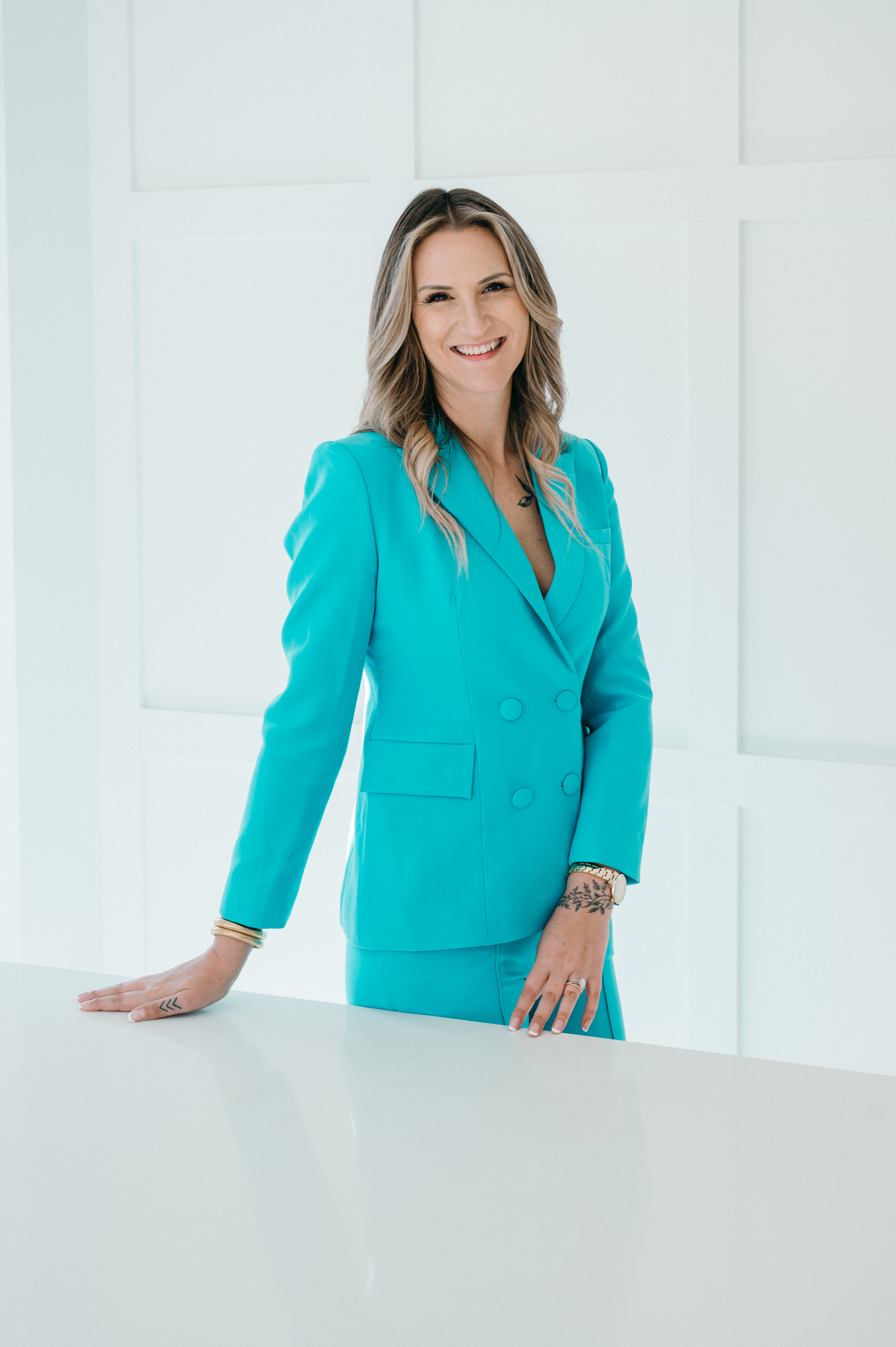
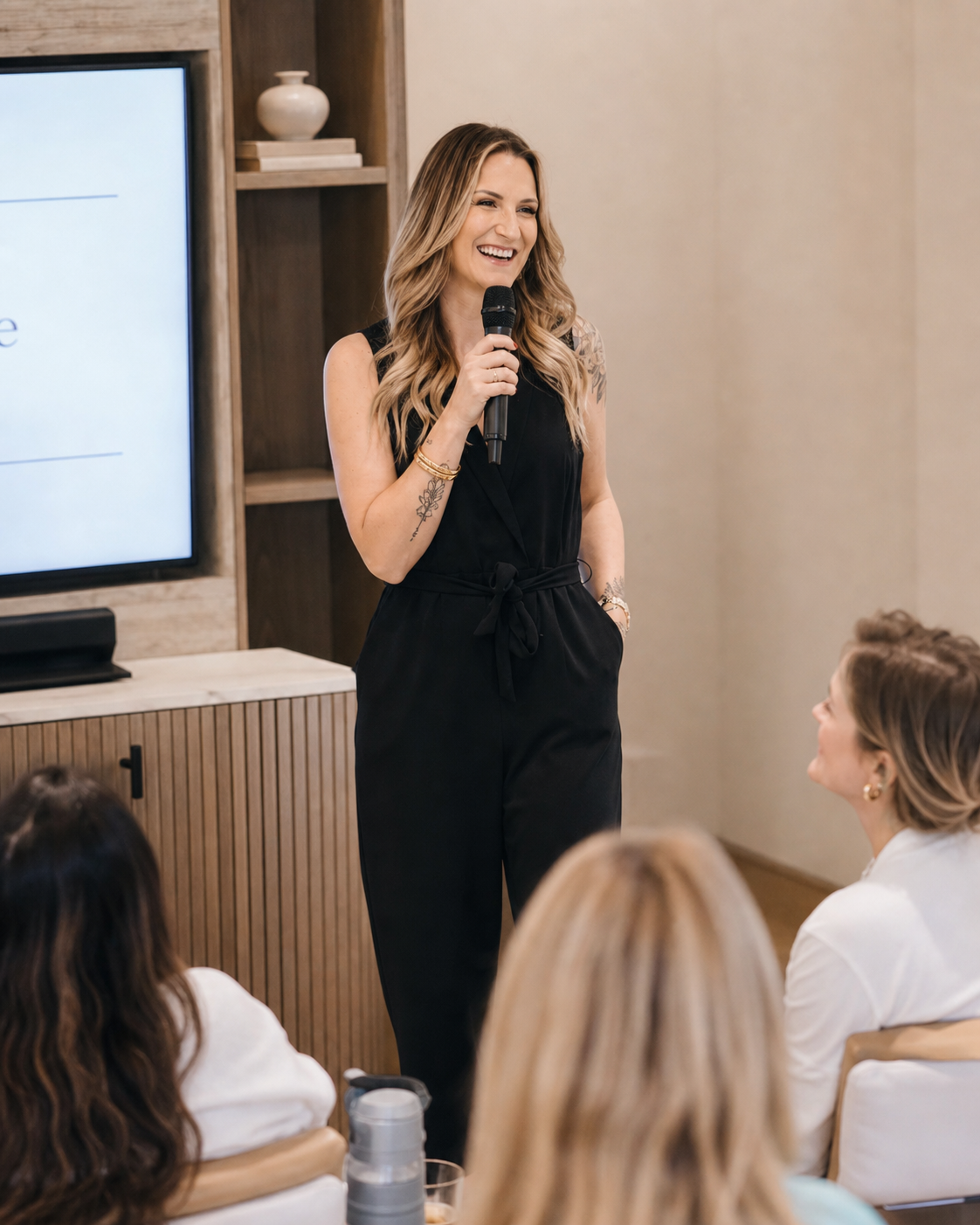
In this episode of The Accidental CEO Podcast, I sat down with Jordan Gill, founder of Systems Saved Me, to talk about what it really takes to build a business that fits your life.
Not your fantasy life.
Not your perfectly batched, color-coded, Pilates-at-9 life.
Your actual life.
The one with school pickups. Health stuff. Client work. Energy dips. Creative bursts. Weird Wednesdays. Full inboxes. Big dreams. And the occasional moment where you stare at your laptop wondering who let you be in charge of all this.
Jordan has built her business around systems, VIP days, done-in-a-day offers, automation, speaking, and scalable tools. But what I loved most about this conversation is that we did not talk about systems like they are some sterile, corporate punishment.
We talked about systems as freedom.
Because a system is not there to make your business less human.
A good system makes sure your humanity is not the thing holding the whole business together with a half-charged phone and a prayer.
The Myth: If It Is Fast, It Must Be Less Valuable
Jordan is known for her work around done-in-a-day offers and VIP days. And honestly, this is a business model more founders should be paying attention to.
Because not every client wants a 12-week experience.
Some people want the fast lane.
Jordan used the example of Disney’s FastPass and Uber Eats’ “get it faster” option. People pay for speed all the time. Not because they are careless. Because they value time.
That is the big reframe.
Speed does not automatically mean shallow.
A VIP day offer can be incredibly strategic, focused, and valuable when it is designed well. In fact, the short timeline often creates more urgency, better focus, and cleaner decision-making.
There is no room for endless overthinking.
There is no twelve-week wandering path through “we’ll circle back.”
There is just a clear problem, a clear container, and a clear transformation.
That does not mean every offer in your business needs to be done in a day. Jordan was clear about this. You can still have retainers, memberships, courses, coaching programs, and longer-term containers.
But if you do not have any offer for the person who is ready now, wants focused support, and values speed, you might be leaving money and momentum on the table.
And no, that does not mean slapping “VIP day” on your services page and hoping the internet hands you cash.
It means asking:
What transformation can I reliably deliver in a concentrated period of time?
What type of client is ready for that level of speed?
What needs to be prepared before the day so the experience actually works?
What happens after the day so the client does not feel dropped off a cliff?
A great VIP day is not rushed.
It is structured.
There is a difference.
Systems Are Not the Enemy of Freedom
Here is where a lot of creative founders get twitchy.
They say they want freedom, but the second we start talking about systems, they imagine a beige corporate binder falling from the sky.
Systems feel rigid.
Systems feel boring.
Systems feel like the opposite of creativity.
But here is the uncomfortable little truth: if your business cannot function without you touching every piece of it, you do not have freedom.
You have a job with better branding.
Jordan said it plainly: systems are the foundation of freedom. If you want things to happen without you, there has to be a structure that allows them to happen without you.
That does not mean you need the most expensive software.
It does not mean you need a 47-step ClickUp buildout.
It does not mean you need to become the kind of person who says “optimize” too many times in a Zoom call.
It means you need to know what should happen, when it should happen, who owns it, and what “done well” looks like.
That is it.
A system can be a checklist.
A Google Doc.
A calendar workflow.
An Airtable base.
A client onboarding sequence.
A sales follow-up process.
A folder structure that does not make you want to fake your own disappearance.
The tool is not the point.
The freedom is the point.
Automation Does Not Mean You Care Less
This part of the conversation made me want to stand up and clap, which is inconvenient while podcasting but emotionally accurate.
Jordan talked about how many founders, especially women, have absorbed the belief that care means manual effort.
If I personally send the email, I care.
If I manually schedule the meeting, I care.
If I type every response from scratch, I care.
If I personally touch every step, I care.
No.
Sometimes that just means you are tired.
Jordan brought up calendar schedulers, and I felt this deeply in my soul. Going back and forth over meeting times is not a premium experience. It is not a personal touch. It is inbox ping-pong with better manners.
Respecting someone’s time is personal.
Making it easy for them to book, pay, prepare, access, respond, or move forward is personal.
Automation does not remove care when it is done well. It removes friction.
And friction is not the same thing as intimacy.
You can have a warm business with clean systems.
You can send automated emails that sound like you.
You can use a scheduler and still be thoughtful.
You can automate delivery and still create a high-touch experience.
The care is not in the unnecessary labor.
The care is in the clarity.
Stop Building Systems for Someone Else’s Brain
One of the biggest mistakes founders make with systems is assuming there is one “right” tool.
There is not.
Jordan loves Airtable. Her business runs heavily through it. Her brain works beautifully with it.
My brain? Not so much.
I can appreciate Airtable from a distance the way I appreciate people who run marathons. Very impressive. Not my ministry.
That is the point.
A system only works if it works for the person using it.
Some people love Airtable.
Some people love Notion.
Some people love Trello.
Some people love ClickUp.
Some people need Miro or Lucidchart because their brain works like a beautiful octopus.
Some people need Google Docs and spreadsheets because simple is the only way anything is actually going to get used.
The goal is not to win a software popularity contest.
The goal is to build a business that can run with less mental load.
If a tool looks impressive but you avoid opening it, it is not a system. It is digital furniture.
When you are choosing tools, ask:
Can I understand this quickly?
Will I actually use it?
Can my team understand it?
Does it reduce decisions or create more of them?
Does this match how I naturally think and work?
Because if your system requires you to become a completely different person, congratulations, you have built yourself a tiny prison with integrations.
Your Audience Might Not Want What Everyone Says They Want
Jordan also shared how she uses ManyChat in her sales process.
If someone comments a specific word on Instagram, they automatically get a DM with the link or resource. Simple. Efficient. Trackable.
And yes, apparently this is controversial in some corners of the internet because we are always looking for something new to overcomplicate.
Jordan tested a more manual version where she personally followed up and started conversations before sending people to a workshop. And those were not the people who bought.
Her audience wanted efficiency.
They wanted the link.
They wanted the details.
They wanted to make their own decision.
That is such an important reminder for founders.
Do not build your sales process around what the internet says buyers want. Build it around what your actual buyers respond to.
Some audiences want conversation.
Some want a sales call.
Some want a clean checkout page.
Some want a detailed FAQ.
Some want to lurk for six months and then suddenly hand you $3,000 without ever speaking to you.
Your job is not to force your audience into someone else’s buyer behavior.
Your job is to pay attention.
What are people clicking?
What are they commenting on?
What are they asking?
What content makes them raise their hand?
Where are they dropping off?
Where are they moving fast?
This is where systems become sales tools.
Not just “backend operations.”
Not just “organization.”
Not just the thing you finally deal with when everything is on fire.
Systems can show you who is interested, what they care about, and what they are ready for.
That is not robotic.

That is smart.
Authority Beats Trend-Chasing
We also talked about visibility, and Jordan said something I wish more founders would hear before they spend another afternoon forcing themselves into a trend that makes them want to crawl out of their skin.
Her Instagram strategy is not built around being the loudest or the cutest.
It is built around authority.
She wants people to see her content and think: she knows what she is talking about.
Not because she is shouting revenue numbers every five minutes.
Not because she is posting every stage photo she has ever taken.
Not because she is chasing whatever audio is trending this week.
Because her content is grounded. Clear. Consistent. Useful.
That kind of authority compounds.
It also creates opportunities.
Jordan shared that she gets booked for speaking opportunities because people trust her expertise and positioning. She has become known for specific things because she keeps talking about those specific things.
This is where a lot of founders get impatient.
They want to be known, but they keep changing what they want to be known for.
One month it is systems.
Then mindset.
Then visibility.
Then AI.
Then a random personal brand pivot because someone on Threads made a point that sounded expensive.
No wonder the audience is confused. You are making them chase you through the content wilderness.
Authority requires repetition.
Not boring repetition.
Not copy-paste repetition.
But consistent ownership of your ideas.
If you want to be known for something, you have to be willing to say it more than feels comfortable.
Speaking Opportunities Are Not Just for the Biggest Names
Jordan also shared a behind-the-scenes look at speaking opportunities, and this part is gold for anyone who wants to get booked on stages.
Event hosts are not always looking for the biggest name.
Especially for smaller, community-driven events, they are looking for what Jordan calls “zero risk.”
They want someone who will show up with grace.
Someone who will be kind.
Someone who will be present in the room.
Someone who will not blast them online if something goes wrong.
Someone who understands the vibe of the event and brings value without making the whole thing about themselves.
That is such a powerful reframe.
Because so many founders assume they need a huge audience, a shiny speaker reel, or a list of fancy credentials before they can pitch themselves.
Those things can help. Sure.
But event hosts are also paying attention to how you carry yourself.
They are looking at your social media.
They are reading your posts.
They are noticing how you talk about people.
They are watching whether you seem generous, thoughtful, and aligned with the space they are creating.
Jordan shared a story about removing someone from a keynote spot after seeing them post in a way that did not align with the kind of energy she wanted at her event.
That might sound harsh until you remember this: when someone puts you on their stage, they are trusting you with their people.
That trust matters.
So if speaking is part of your growth strategy, your content is part of your application whether you realize it or not.
Build the Version That Works for You
One of my favorite ideas from Jordan was what she called “Jordan coding” an idea.
Meaning: instead of copying what everyone else is doing, she runs the idea through her own goals, data, personality, and audience.
That is the move.
Because the problem is not that you saw someone else’s strategy.
The problem is when you adopt it without translating it.
Jordan gave the example of Instagram series. She saw a lot of influencers doing them to grow followers. But follower growth was not her main goal. She wanted brand deals, speaking opportunities, and leads.
So she built her version around those goals.
That is the difference between copying and adapting.
Copying says: “This worked for them, so I’ll do the same thing.”
Adapting says: “What version of this makes sense for me, my audience, my goals, and my capacity?”
That question will save you so much frustration.
Because most founders are not failing because the strategy is bad.
They are failing because the strategy does not fit.
It does not fit their energy.
It does not fit their audience.
It does not fit their offer.
It does not fit their season of life.
It does not fit how they actually make decisions.
And then they blame themselves.
But maybe you are not inconsistent.
Maybe the system was built for someone else’s nervous system.
Capacity Is a Business Strategy
Toward the end of the conversation, Jordan shared how her capacity has changed over time.
After running a group coaching program with hundreds of clients and hiring multiple coaches, she hit a moment where she could either hire another coach and ramp back up, or she could pause and tell the truth.
She did not want to hire another coach.
At the same time, life was changing. She became more present in her role with her bonus son, including long drives and schedule demands that made her old way of working less realistic.
This is the part many founders skip.
They say they are building a business around their life, but they only mean the fun version.
Travel.
Midday walks.
Slow mornings.
Working from pretty places with suspiciously tiny coffees.
But building a business around your life also means building around the inconvenient parts.
The school pickup.
The caregiving.
The health needs.
The days you only have 45-minute work blocks.
The season when your old offer model no longer fits.
Jordan shifted toward micro tools and mini SaaS products because they fit her current capacity. They allow customers to use the tool without needing constant access to her. She can focus on marketing in shorter bursts, which works better for her current life.
That is not failure.
That is leadership.
A CEO does not keep forcing an old model because it used to work.
A CEO asks: What does this season require now?
You Are Allowed to Change the Business
This is the part I want every founder to take seriously.
You are allowed to change the business when your life changes.
You are allowed to retire an offer.
You are allowed to simplify.
You are allowed to automate.
You are allowed to stop doing the thing that technically works but quietly drains you.
You are allowed to build something that fits your real capacity instead of your fantasy capacity.
That does not make you flaky.
It makes you honest.
There is a difference between quitting because something is hard and pivoting because something is no longer aligned.
Jordan said you can give yourself a few minutes to be upset when life changes. Then you move toward the solution.
That is the whole game.
Not pretending you are endlessly available.
Not forcing yourself into someone else’s business model.
Not building a company that only works if you are operating at 112 percent capacity forever.
A sustainable business is not one that never changes.
It is one that can change without collapsing.
The Real Question: What Are You Still Doing Manually That Should Not Require You?
Here is the audit I want you to run after listening to this episode.
Look at your business and ask:
Where am I manually doing something that could be automated?
Where am I calling something “personal touch” when it is actually poor structure?
Where am I using a tool that does not work for my brain?
Where am I following someone else’s strategy without adapting it to my goals?
Where has my capacity changed, but my business model has not caught up?
Where do I need a system, not more willpower?
Because that is usually the issue.
It is not that you need to be more disciplined.
It is not that you need to wake up earlier.
It is not that you need another planner with a prettier cover.
You need fewer things depending on your memory.
You need fewer decisions living in your head.
You need fewer manual steps pretending to be premium service.
You need a business that can hold more without requiring you to carry everything.
That is what systems do when they are built well.
They do not make you less creative.
They give your creativity somewhere safe to land.
Final Takeaway
Building a business that fits your life is not about doing less for the sake of doing less.
It is about designing your offers, systems, sales process, visibility, and tools around reality.
Your real audience.
Your real energy.
Your real responsibilities.
Your real goals.
Your real season.
Jordan’s work is such a strong reminder that systems are not the opposite of freedom. They are often the only reason freedom becomes possible.
And if your business still requires you to manually touch every piece of it, that is not a character flaw.
It is an invitation.
Not to burn it all down.
To build it better.
SUBSCRIBE ON YOUR FAVORITE PODCAST PLAYER
Leave a Reply
More episodes