
There is a gap most founders do not talk about enough.
Not the gap between where they are and their revenue goal. Not the gap between what they know and what they still need to learn. The real gap is between the founder who built the business and the CEO the business now requires.
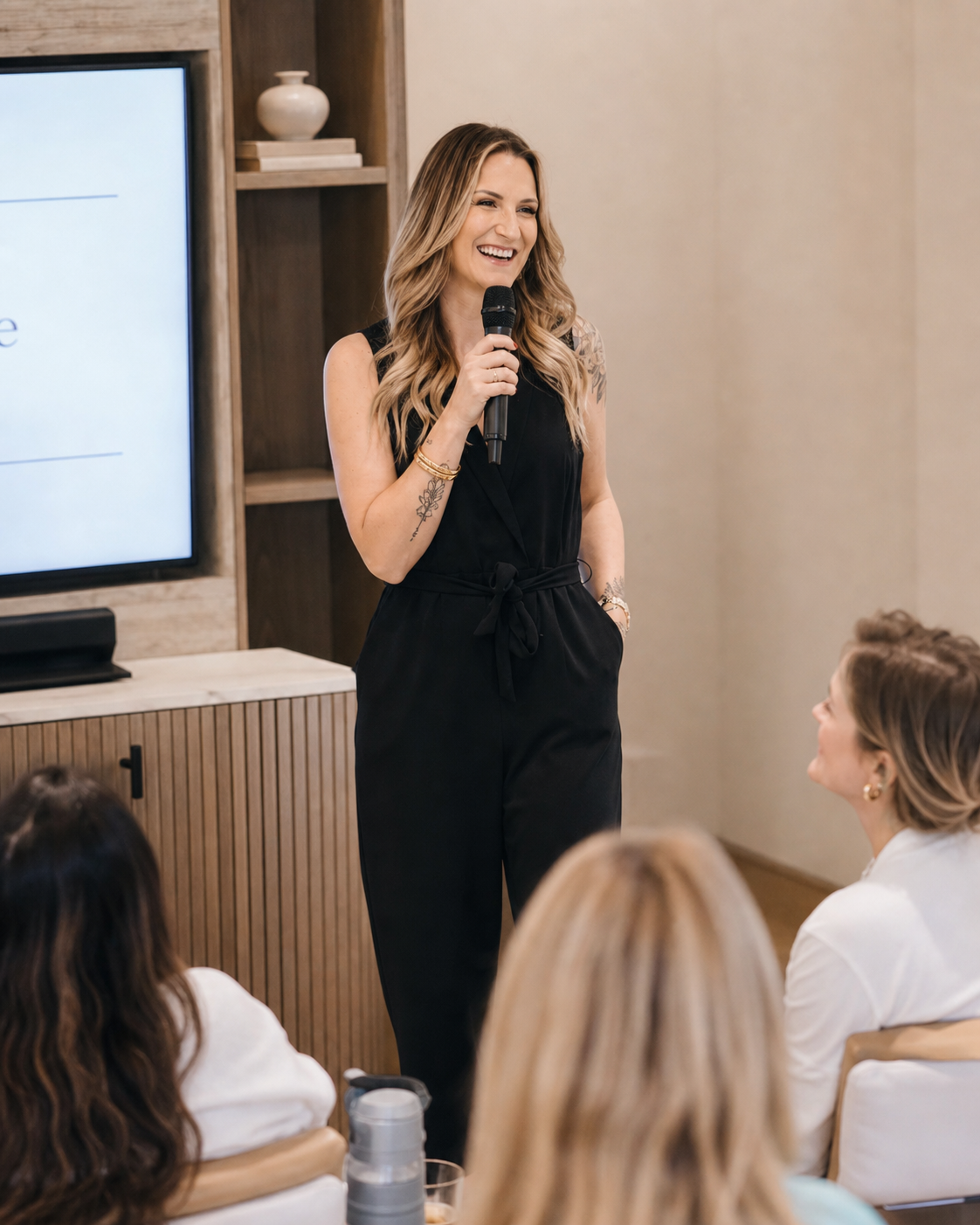
That is what the Sustainable CEO Summit confirmed over three days of conversations with serious founders, operators, strategists, and coaches.
The summit was built around one central idea: the way many founders are growing their business is quietly costing them more than they realize. Not always in a dramatic, obvious way. More often in the slow, accumulated way. The way where one day you look up and realize you have built something impressive, but you are also trapped inside it. Across 27 expert conversations, three themes stayed consistent: protecting CEO energy, building a business that can actually hold growth, and learning to lead as a supported CEO instead of a solo act held together by sheer will.
What became clear is that the tactical challenges founders face are real, but they are not the whole story. The deeper issue is identity.
The CEO gap is not about intelligence or work ethic
One of the strongest patterns that surfaced throughout the summit was this: founders are not struggling because they are lazy, unclear, or incapable. They are struggling because they built something real and never fully updated the role they are playing inside it.
They are still operating like the person who started the business, even though the business now needs a different kind of leadership.
That is the real CEO gap.
Nobody gives founders a formal handoff. There is no moment where someone sits you down and says, “You are no longer the scrappy operator. Your business now needs a strategic leader.” So most people keep doing what has always worked. They keep holding everything together, staying close to every detail, and stepping in whenever something feels off. But as the business grows, the cost of that pattern rises with it.
The exhaustion is not always from working too hard. Often, it is from working at the wrong level.
High standards are not the problem
Another lesson the summit reinforced is that high standards are not what keep founders stuck.
What keeps them stuck is when those standards live only in their head.
When excellence is undocumented, unspoken, and untransferable, the founder becomes the only person who can reliably produce the result. That creates a dangerous loop. Every attempt to step back feels messy. Every imperfect handoff feels like proof that delegation does not work. Every frustration becomes another reason to take the task back.
But the real problem is not always the team.
It is often a lack of clarity.
A major lesson from building the summit itself was that standards had to be made visible. What does a great speaker intro sound like? What does a strong attendee experience require? What does a well-run session actually feel like? Once those standards were clearly defined, other people could hold them too. And the result was not lower quality. It was stronger quality because more people were aligned around the same target.
This is where many founders need to grow next.
Not just in delegating tasks, but in delegating clarity.
Because if your standards are not transferable, your time will never fully be free.
Capacity does not come from doing less
This is another important distinction the summit made painfully clear.
A lot of founders assume that if they are tired, overloaded, or burned out, the answer is simply to do less. Sometimes that is true. But more often, the answer is to do different work.
Real capacity is not created by dropping random tasks. It is created by moving out of work that belongs to your team, your systems, and your structure, and staying anchored in the work that only a CEO can do.
Capacity does not come from doing less. It comes from doing the right thing.
That shift sounds simple, but it is not easy. Because many founders are not just carrying logistics. They are carrying emotional ownership. The mental tabs stay open. The checking, noticing, remembering, anticipating, rescuing. Hiring support does not automatically close those tabs. A real shift happens when someone else is allowed to own the outcome, not just complete the task.
Support has to come before freedom
One of the biggest myths founders believe is that support comes later.
Later, when there is more margin. Later, when things calm down. Later, when the revenue is higher. Later, when they finally feel ready.
But the summit confirmed the opposite.
Support is what creates the margin.
Structure is what creates the breathing room.
Founders do not get free space first and then build support. They build support before they feel fully ready, and that is what creates the space they have been waiting for.
This is one of the hardest leadership decisions to make because it feels risky. It can feel like investing energy you do not have into something that is not guaranteed. But staying in the same pattern is a decision too. And for many founders, that pattern is already too expensive.
Identity work is what makes the tactical work stick
This may have been the clearest surprise of the entire summit.
The tactical sessions landed. The conversations about systems, delegation, structure, and operations mattered. But the sessions that seemed to move people most were the ones about identity.
Because most founders already know what they need to change.
They know they need to delegate more.
They know they need stronger systems.
They know they need to stop being the bottleneck.
The problem is rarely lack of information.
The problem is that there is often an older identity beneath the pattern, one that still believes value comes from being the one who holds everything together. One that learned, in business or even earlier in life, that the safest move is to stay close, stay responsible, and stay in control.
That identity does not respond to another checklist.
It does not disappear because the SOP is good.
It will keep pulling the founder back into over-functioning until it is actually addressed.
That is why someone can build a beautiful delegation system and still find themselves redoing team work late at night. Until the identity shifts, the tactics keep leaking.
The real value of an event is not the content
The summit also confirmed something worth saying out loud: the value of an event is not just the information shared.
Most content can be found somewhere else.
What changes things is the decision someone makes because of what they heard.
That is part of why the Audacity Bridge Scholarship mattered so much. It was designed not as charity or rescue, but as a bridge for a founder who is ready to implement. Ready to make the COO-level moves now, not someday. That framing matters because sustainable growth is not built on inspiration alone. It is built on readiness, specificity, and action.
Three questions every founder should sit with now
If there is one thing these three days confirmed, it is that many founders are not actually missing ambition. They are missing the shift required to lead at the level their business now demands.
So here are the three questions worth sitting with after the summit:
Where in your business are you still operating like the founder when the business needs you to lead like the CEO?
What standards are still trapped in your head instead of documented, communicated, and transferable?
What would change if your capacity stopped being the ceiling?
These are not abstract questions. They are strategic ones.
Because the goal is not simply to be less busy.
The goal is to create enough structure, support, and leadership capacity to focus on the work that actually belongs to you.
That is the real CEO seat.
And for many founders, that is the gap that matters most.
SUBSCRIBE ON YOUR FAVORITE PODCAST PLAYER