
Most people do not have a content problem.
They have a clarity problem.
That is the uncomfortable little truth sitting underneath a lot of “why isn’t this converting?” spirals. The posts are going out. The reels are reeling. The captions are captioning. The likes show up just enough to keep hope alive. And still? No real traction. No clean word-of-mouth. No obvious authority. No steady stream of right-fit clients.
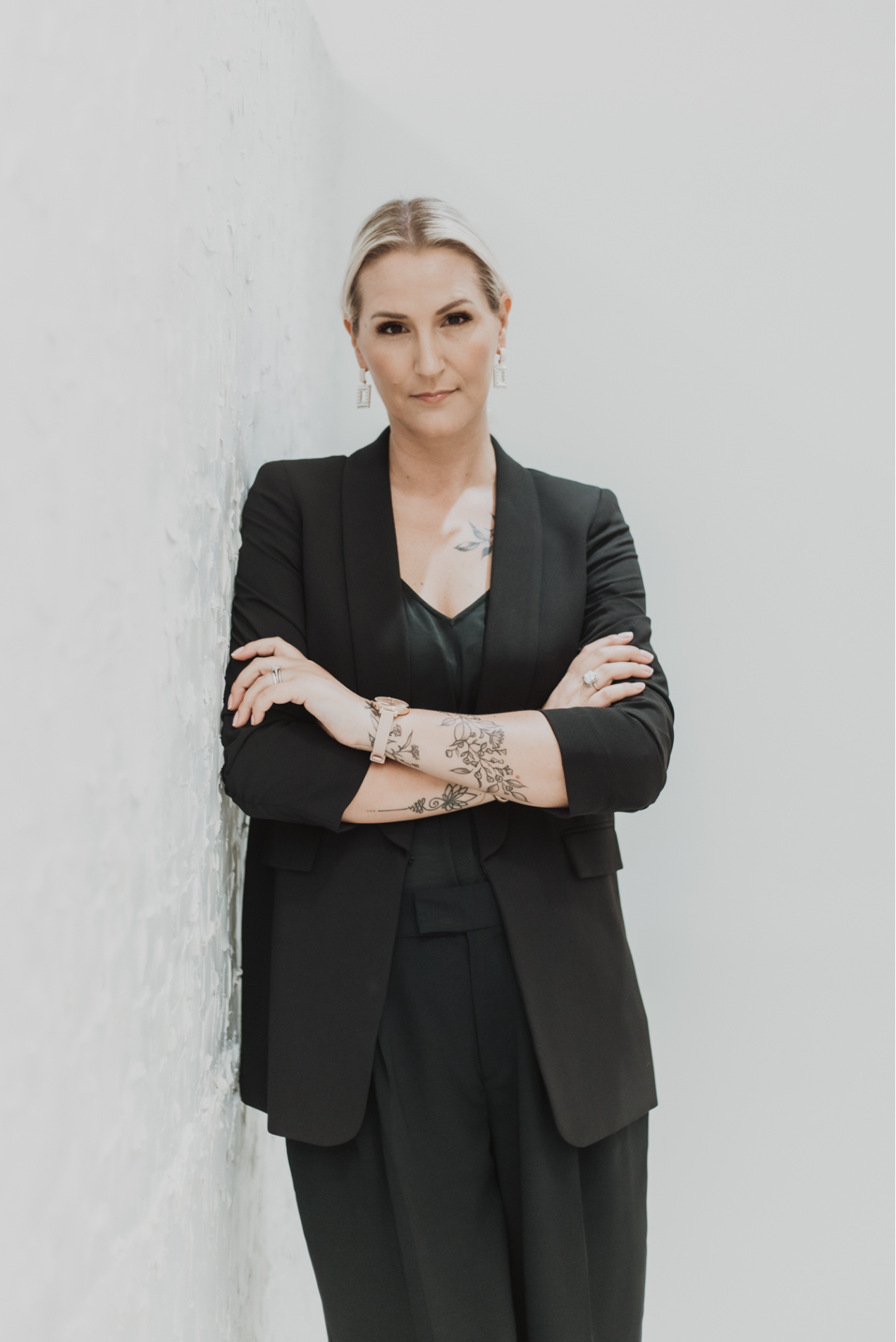
That is exactly why this conversation with Hayley Luckadoo hits.
In this episode of Accidental CEO, Hayley breaks down the difference between having a personal brand and simply being a person with Wi-Fi. And yes, there is a difference. A big one. Because posting online does not automatically make you memorable. And being visible does not automatically make you credible.
If you are an established founder who knows you are good at what you do but feels like the market still is not fully getting it, this one is worth paying attention to.

Why this conversation matters right now
A lot of business owners are drowning in information.
You can get advice anywhere. Google will hand you 47 opinions before breakfast. ChatGPT will happily spit out captions on command. Social media is packed with tips, hacks, formulas, templates, and hot takes.
And somehow, for all that noise, plenty of brilliant founders are still not clearly known for what they do.
That gap matters.
Because if people remember your personality but cannot explain your expertise, your brand is muddy. If they enjoy your content but would not confidently refer you, your authority is still underbuilt. If your message shifts every other week, it becomes a lot harder for the right people to trust you fast.
Hayley’s take is refreshingly clear: your personal brand is not your colors, your logo, your follower count, or your aesthetic. It is what you are truly known for. That is the whole game.
Hayley’s origin story is a masterclass in building from what you have
Before she was teaching personal branding, Hayley was navigating a brutal turning point.
She lost financial aid right before senior year and became a college dropout overnight. At almost the exact same time, her high school fiancé called off their wedding. It was the kind of season that could flatten a person. Instead, she asked a deceptively simple question: what am I good at right now?
Her answer was wedding planning.
She had planned her own wedding, was deeply organized, and saw an immediate way to turn that skill into income. Within six months, she had built a full wedding planning business. That eventually expanded into helping other wedding pros with branding and marketing, and later grew into interviews, podcasting, and the Females on Fire brand.
There is something worth paying attention to there.
She did not start with a flawless five-year plan. She started with honesty, resourcefulness, and motion. That is often how real businesses begin.
Personal branding is not the same as posting
This is where the episode gets especially good.
Hayley explains that everyone already has a personal brand whether they realize it or not. The issue is not whether you have one. The issue is whether you are shaping it on purpose.
A lot of founders think building a personal brand means being everywhere, posting constantly, speaking on stages, growing followers, and polishing their image until it looks expensive.
That is not the core of it.
According to Hayley, personal branding is about being known for something specific. You might be capable of teaching a dozen different things. You might have multiple offers. You might be talented in several areas. None of that automatically creates a sharp brand. In fact, it often waters it down.
This is the difference between content and positioning.
Content says things.
Positioning makes those things stick.
The four layers of a strong personal brand
One of the most useful parts of this episode is the framework Hayley shares for building a brand people actually remember. She breaks it into four layers:
1. Identity
This is who you are beyond your niche. Beyond the elevator pitch. Beyond “I help X do Y.” It is your beliefs, your values, the things you refuse to compromise on, and the traits your clients thank you for that are not just about deliverables.
2. Perspective
This is your point of view. Not information for the sake of information, but interpretation. This matters because information is everywhere. Interpretation is what makes people stop and think, “Oh. I have never heard it put like that before.”
3. Narrative
This is not just your origin story. It is the meaning you make from your experiences. It is how your lessons, mistakes, expertise, and lived reality become useful to the people you want to serve.
4. Recognition
This is the top layer. It is what you become known for once the other pieces are in place. And that is key. Recognition comes last, not first.
That order matters because too many founders try to skip straight to “what should I be known for?” before they have done the deeper work of identifying what they actually believe and how they actually want to be perceived.
The 3D Edge: the part that makes you memorable
Hayley also shares one of the strongest ideas in the episode: the 3D Edge method.
If you want to be memorable, you need an edge. Not fake controversy. Not noise for the sake of noise. A real edge.
Her framework breaks that edge into three parts:
Defiance
What do you reject in your industry?
What is the thing everyone accepts that you push back on? Maybe you are a coach who rejects hustle culture. Maybe you are a creative founder who refuses to equate quality with overwork. Maybe you are a service provider who believes the client is not always right.
That “hear me out” opinion is often where your memorability starts.
Devotion
What are you obsessed with that everyone else overlooks?
This can be a value, a detail, a tiny preference, or a quirky part of your philosophy. Hayley gives the example of encouraging women to show up in sweatpants instead of pretending their “higher self” needs a full glam team. It is specific. Human. Unexpected. And because of that, it sticks.
Distinction
What do your clients consistently get from you that they do not get anywhere else?
If you do not know, ask them. What made them choose you? What felt different? What result or experience made your work stand out? That feedback often reveals the thing you have gotten so used to delivering that you no longer realize it is unusual.
Put those three together and you stop looking like a flat face on a screen. You become memorable.

Why some content gets attention but not clients
This part deserves to be stapled to the forehead of every founder wondering why content is “doing well” but sales still feel weird.
Hayley says if you are getting likes and engagement but not converting, there is a disconnect. Full stop. The work is finding where it is.
Maybe the message is interesting, but it is not clear.
Maybe your voice does not match your positioning.
Maybe your content is visible, but it is attracting the wrong people.
Maybe you are teaching useful things, but not tying them back to what you actually want to be hired for.
Maybe you are showing up consistently, but not putting enough of yourself into the message.
And yes, maybe your brand sounds polished but empty because AI is doing too much of the talking.
That line from Hayley lands hard: if you are not putting yourself into the message, you are not building a personal brand. You are building a content machine.
Ouch. True, though.
What makes someone instantly credible online
This was one of my favorite parts of the conversation because it cuts through a lot of nonsense.
Hayley makes the case that credibility does not come from follower counts, logos, press, or stage photos alone. Those things can support visibility, sure. But they do not replace clarity.
What makes someone feel credible fast?
A clear message.
A confident voice.
A signature point of view they do not apologize for.
That is what sells faster than the vanity metrics.
Because when someone lands on your content, they are not only evaluating whether you seem likable. They are asking whether you feel coherent. Whether your message hangs together. Whether they can quickly understand what you stand for and why it matters.
That is what trust is built on.
Attention is not authority
Let’s say this plainly: attention is not the goal.
Hayley talks about the authority flywheel as an ecosystem of point of view, visibility, proof, and reputation. A strong point of view gets attention. Visibility creates opportunities. Opportunities create proof. Proof builds reputation. Reputation multiplies visibility.
That means attention is only one piece.
If the rest of the wheel is broken, the whole thing wobbles.
You can absolutely build an audience of people who feel like they are your internet friends. That is not worthless. Relationship matters. But if people enjoy you and still would not confidently recommend you for your expertise, the authority piece is not fully there yet.
That distinction matters a lot for business owners who are tired of being “known” but not properly paid.
The part founders need to hear
You do not need more content chaos.
You need cleaner signals.
You need stronger patterns in your messaging.
You need clearer ties between what you say, what you sell, and what you want to be remembered for.
You need a point of view that sounds like a person, not a template.
And you need to stop assuming visibility alone will do the heavy lifting.
Because the real goal is not to be loud.
It is to be unmistakable.
Final takeaway
If this episode proves anything, it is that the strongest personal brands are not built on performance. They are built on precision.
Hayley Luckadoo’s frameworks make that incredibly clear. Know who you are. Know what you reject. Know what makes you different. Know what you want to be known for. Then show up with enough consistency and conviction that people can repeat your name and your expertise in the same sentence.
That is when a personal brand starts doing its real job.
Not just getting attention.
Creating authority.
Listen to the full episode, then audit your own brand with one uncomfortable question: what am I clearly known for right now? If the answer feels fuzzy, start there.
SUBSCRIBE ON YOUR FAVORITE PODCAST PLAYER